

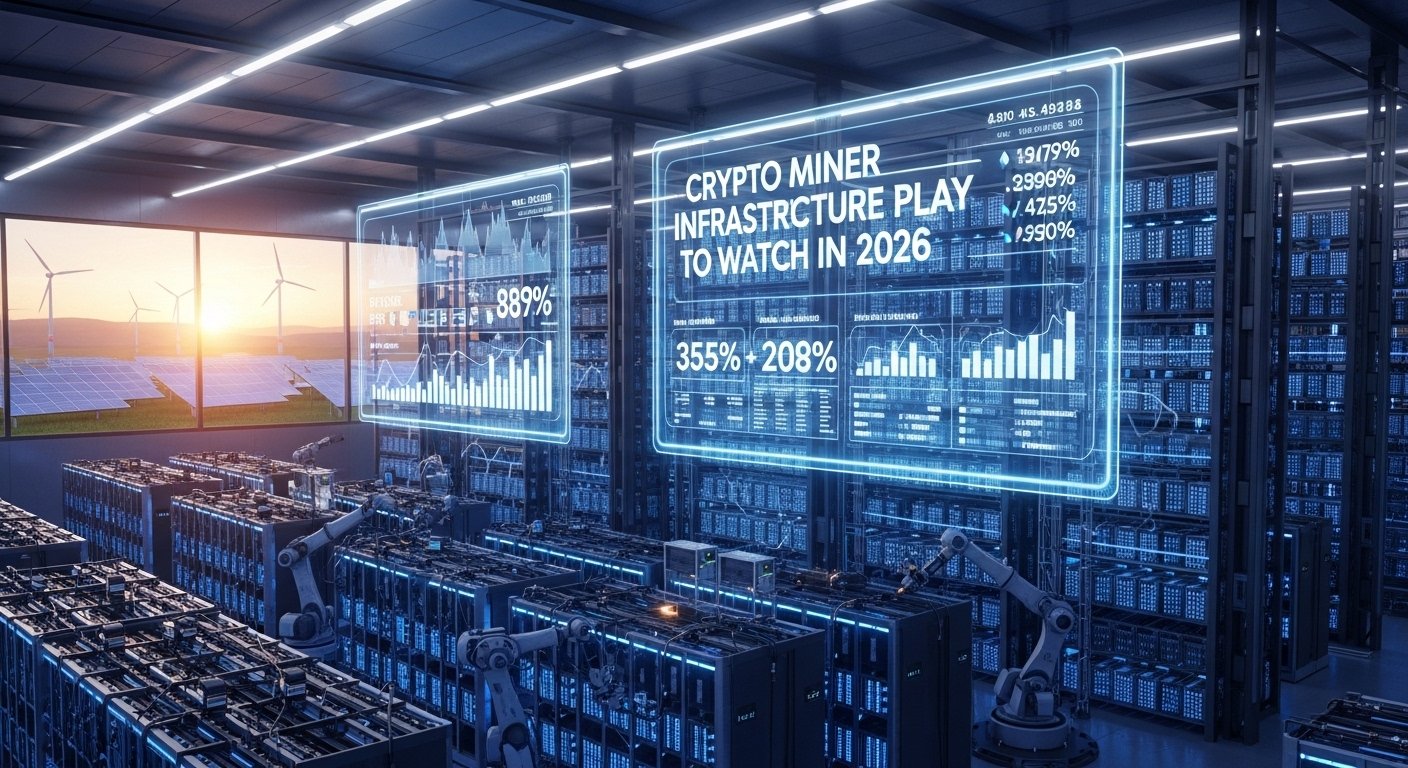
Crypto Miner Infrastructure Play to Watch in 2026 Over the last two years, investors have been obsessed with artificial intelligence stocks. Companies tied to GPUs, cloud infrastructure, and AI model training have seen enormous inflows of capital as markets chased the next technological revolution. Yet, as valuations stretched and expectations soared, some analysts began to question whether the real infrastructure play of 2026 might not be found in AI equities at all. Instead, attention is quietly shifting toward the crypto mining sector, where companies are building the physical backbone of the digital economy, high-performance computing, and blockchain infrastructure.
While AI stocks captured headlines, crypto miners spent the bear market building. They expanded data centers, secured low-cost energy contracts, optimized operations, and positioned themselves as more than just Bitcoin mining companies. Many are now evolving into hybrid infrastructure providers capable of supporting both blockchain networks and AI workloads.
This transformation is changing how investors view the sector. Instead of seeing crypto miners as speculative, high-risk bets tied only to token prices, markets are beginning to treat them as essential infrastructure plays in a world increasingly dependent on computing power. As 2026 approaches, this narrative shift could become one of the most important themes in both the crypto market and the broader technology landscape.
Crypto Miner Infrastructure Play to Watch in 2026
The AI boom was driven by explosive demand for computing power. Companies like Nvidia saw their valuations skyrocket as they supplied the chips needed to train large language models and power data centers. Investors piled into anything related to AI, from semiconductor firms to cloud providers and even speculative startups claiming AI integration.
However, this rapid enthusiasm created a valuation gap. Many AI-related stocks began trading at multiples that assumed years of near-perfect execution and continuous growth. Meanwhile, crypto miners, despite improving balance sheets and expanding infrastructure, remained deeply discounted.
This divergence created an unusual opportunity. On one side of the market were companies priced for perfection. On the other were infrastructure providers trading at fractions of their potential value, despite owning large-scale data centers, energy contracts, and specialized hardware. For forward-looking investors, the question became clear: which sector offers more realistic upside from current levels.
Why Crypto Miners Are Becoming Infrastructure Companies
The traditional image of a crypto miner is a warehouse filled with noisy machines solving cryptographic puzzles. While technically accurate, this picture is outdated. Modern miners operate sophisticated data centers that resemble traditional cloud infrastructure facilities.
These operations rely on three core assets: energy, hardware, and physical infrastructure. Each of these elements is also critical for AI computing, which requires massive processing power and stable electricity supplies.
As a result, many mining firms are now repositioning themselves as data center operators, AI-ready infrastructure providers, and energy-efficient computing hubs. Instead of relying solely on block rewards and transaction fees, they are exploring partnerships with AI companies that need large-scale compute capacity. This shift is especially relevant in a world where demand for computing power is growing faster than the supply of new data centers.
The Energy Advantage of Crypto Miners
One of the most overlooked strengths of crypto mining companies is their relationship with energy markets. Mining operations are often built in regions with abundant, low-cost electricity. Some even use stranded or excess energy that would otherwise go to waste. This energy-first strategy gives miners a structural advantage over traditional data centers. While AI companies compete for limited grid capacity, miners already control significant power resources.
In some cases, mining firms are working directly with energy producers, forming partnerships that ensure long-term access to cheap electricity. These agreements can create stable operating costs and protect margins, even during volatile market conditions.
For AI developers facing rising energy prices and infrastructure bottlenecks, these mining facilities suddenly look very attractive.
Bitcoin’s Role in the Infrastructure Narrative
At the heart of the crypto mining industry is Bitcoin, the world’s largest and most secure blockchain network. Bitcoin mining is what secures the network, processes transactions, and maintains decentralization.
As institutional adoption grows, Bitcoin is increasingly viewed as digital gold, a store of value, and a strategic treasury asset. Companies like MicroStrategy have accumulated large Bitcoin reserves, reinforcing the narrative that the asset has long-term institutional relevance.
This shift matters for miners because it stabilizes demand for their core service: securing the network. Instead of relying solely on speculative retail activity, miners now benefit from institutional interest and long-term capital inflows into the Bitcoin ecosystem.
As a result, mining operations are no longer seen as temporary or speculative. They are becoming essential infrastructure for a global digital asset system.
The Post-Halving Efficiency Race
Every four years, Bitcoin undergoes a halving event that reduces the block reward miners receive. This process forces the industry to become more efficient, as only the most optimized operations remain profitable. While halvings historically triggered short-term stress, they also led to industry consolidation and technological improvements. Weak operators exited the market, while stronger companies acquired assets at discounted prices.
This cycle has transformed the mining sector into a more professional, capital-efficient industry. Modern miners focus on hashrate efficiency, energy optimization, and operational scalability. By the time 2026 arrives, the surviving companies will likely be those with the strongest infrastructure, the cheapest power, and the most advanced facilities. These characteristics closely resemble the qualities investors look for in traditional infrastructure plays.
Convergence of AI and Crypto Mining
The most important theme shaping the 2026 outlook is the convergence of AI and crypto mining infrastructure. Both industries require large-scale data centers, powerful hardware, and massive amounts of electricity. AI workloads differ from mining in technical structure, but the underlying infrastructure is often similar. This creates an opportunity for miners to diversify their revenue streams.
Some companies are already experimenting with hybrid facilities that can switch between mining and AI compute depending on market conditions. When Bitcoin prices are strong, mining becomes more profitable. When AI demand surges, computing resources can be redirected toward AI clients. This flexibility could become a major competitive advantage. Instead of relying on a single revenue source, mining companies can participate in multiple high-growth sectors simultaneously.
Why the Market May Reprice Crypto Miners
Valuation is ultimately driven by narrative and fundamentals. For years, crypto miners were viewed as speculative bets tied to volatile token prices. But as the industry matures, that perception is changing. Investors are beginning to recognize that mining companies own real assets: land, power contracts, data centers, and specialized hardware. These assets have intrinsic value, even outside of crypto markets.
If miners successfully transition into hybrid compute providers, the market may start valuing them more like infrastructure companies than speculative crypto plays. This shift could lead to higher valuation multiples, similar to those seen in AI-related firms. In other words, the same infrastructure that supports Bitcoin today could support AI tomorrow.
The Strategic Importance of Compute Power
Compute power is becoming one of the most valuable resources in the modern economy. From AI training to blockchain validation, nearly every emerging technology depends on access to large-scale processing capacity. Countries and corporations are now competing to secure computing infrastructure, much like they once competed for oil or natural gas. This trend has elevated the importance of data centers, energy resources, and hardware supply chains.
Crypto miners sit at the intersection of all three. They operate data centers, secure energy contracts, and deploy specialized hardware at scale. These capabilities make them strategic players in the future computing landscape. As demand for decentralized computing, AI infrastructure, and digital asset security continues to rise, miners could find themselves at the center of multiple growth trends.
Risks and Challenges Facing Crypto Miners
Despite the optimistic outlook, the mining sector is not without risks. Bitcoin price volatility remains the most obvious challenge. A prolonged bear market can reduce mining revenues and pressure profit margins. Regulatory uncertainty is another concern. Governments around the world are still developing policies related to crypto mining, energy consumption, and digital assets. Changes in regulations could impact operations or increase costs.
Competition is also intensifying. As the industry becomes more institutionalized, large players with deep pockets are entering the market. This could squeeze smaller operators and accelerate consolidation. Finally, the transition toward AI infrastructure is not guaranteed. While the opportunity is real, not every mining company will successfully adapt to hybrid computing models.
What to Watch as 2026 Approaches
Several key indicators will determine whether crypto miners truly become the infrastructure play of 2026. One major factor is the pace of AI adoption. If demand for compute power continues to outstrip supply, miners with existing data center infrastructure could benefit from new partnerships and revenue streams. Another factor is Bitcoin’s long-term trajectory. Continued institutional adoption and favorable macroeconomic conditions could strengthen the mining sector’s core business.
Energy markets will also play a critical role. Companies that secure low-cost, renewable, or stranded energy sources will likely outperform competitors with higher operating costs. Finally, investor perception will be crucial. If the market begins to value miners as infrastructure companies rather than speculative crypto plays, significant re-rating could occur.
Conclusion:
The AI boom captured global attention, but beneath the surface, another infrastructure story has been unfolding. Crypto miners have spent years building large-scale data centers, securing energy contracts, and optimizing operations.
As the worlds of AI and blockchain begin to converge, these companies are finding themselves in a unique position. They control the physical infrastructure required for both industries, giving them a strategic advantage in a compute-driven economy.
While risks remain, the sector’s transformation from speculative crypto play to hybrid infrastructure provider could reshape investor perceptions. If this trend continues, the real infrastructure winners of 2026 may not be traditional AI stocks, but the crypto miners powering the next generation of computing.
FAQs
Q: Why are some investors calling crypto miners the real infrastructure play of 2026?
Crypto miners are increasingly being viewed as infrastructure companies because they own and operate large-scale data centers, energy contracts, and specialized computing hardware. These assets are essential not only for securing blockchain networks but also for supporting AI workloads. As demand for compute power rises, miners with established infrastructure could benefit from new revenue streams beyond traditional Bitcoin mining.
Q: How do crypto miners compare to AI stocks in terms of valuation?
Many AI-related stocks experienced rapid price increases due to strong investor enthusiasm and expectations of future growth. In contrast, crypto miners often trade at lower valuation multiples despite owning significant physical infrastructure. This gap suggests that miners could have more upside potential if the market begins to value them as essential infrastructure providers rather than speculative crypto plays.
Q: What role does energy play in the crypto mining business model?
Energy is one of the most critical factors in mining profitability. Successful miners secure access to low-cost electricity, often through long-term contracts or partnerships with energy producers. Some even use excess or stranded energy sources. This energy advantage not only improves mining margins but also makes these facilities attractive for AI computing, which also requires large amounts of power.
Q: Can crypto miners really transition into AI infrastructure providers?
Many miners already operate data centers with the power capacity and cooling systems required for high-performance computing. While AI workloads differ from mining operations, the underlying infrastructure is similar. Some companies are exploring hybrid models where facilities can support both mining and AI computing, allowing them to diversify revenue streams and adapt to changing market conditions.
Q: What are the biggest risks facing crypto miners over the next few years?
The main risks include Bitcoin price volatility, regulatory uncertainty, rising competition, and the challenge of successfully transitioning into hybrid computing models. While the infrastructure narrative is compelling, not all mining companies will adapt equally. Investors will likely favor firms with strong balance sheets, efficient operations, and strategic energy partnerships.
