

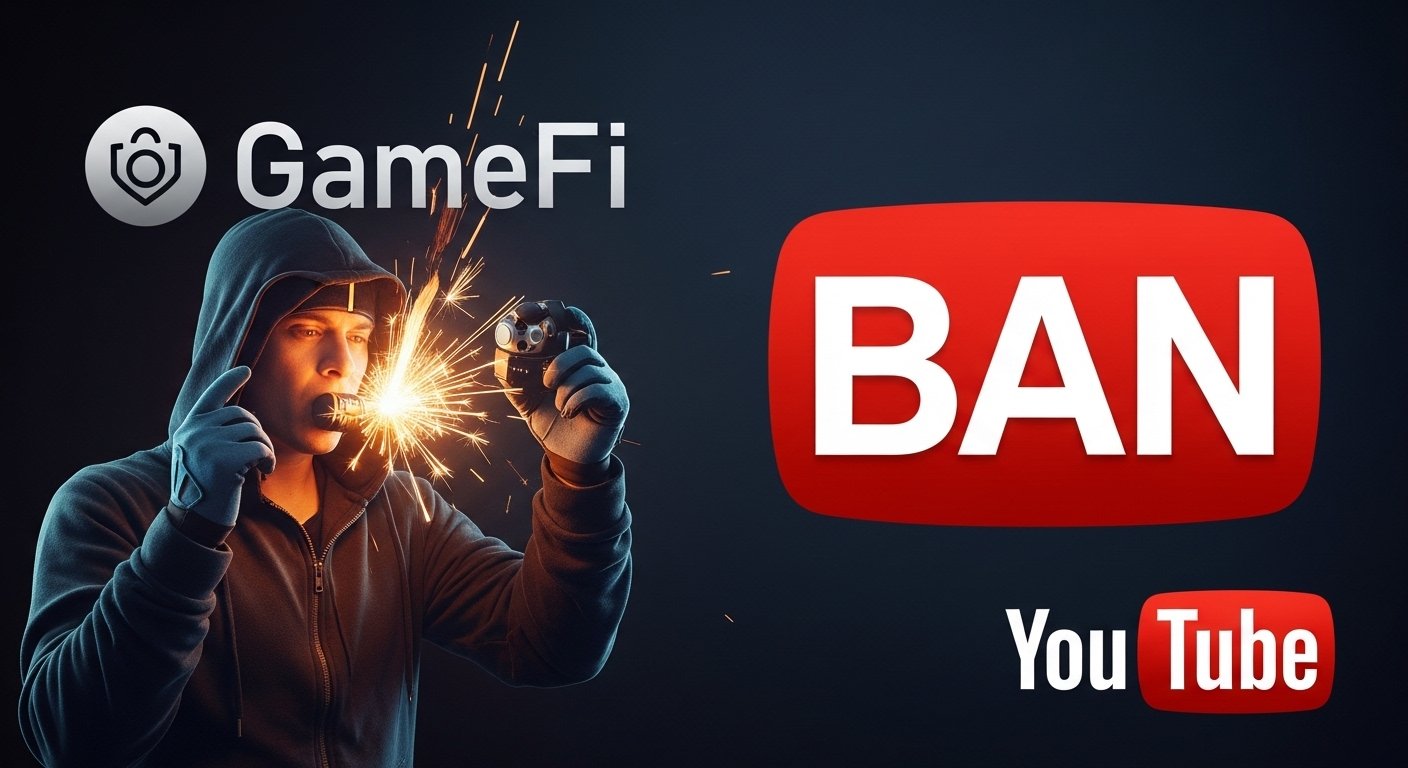
GameFi News YouTube Ban Sparks Panic as Gaming Dominates DApps GameFi news has taken a dramatic turn as recent YouTube account bans linked to crypto gaming channels triggered fear across the community. The sudden disruption raised concerns about the fragility of centralized platforms and their influence over decentralized innovation. At the same time, fresh data reveals that gaming now represents roughly 28% of all decentralized application activity, reinforcing its status as one of the strongest pillars in the blockchain ecosystem.
This contrast between centralized platform risk and decentralized growth defines the current GameFi narrative. While creators worry about censorship and content restrictions, developers and players continue to fuel the rapid expansion of blockchain gaming, play-to-earn ecosystems, and decentralized virtual worlds. The numbers show a resilient sector that keeps attracting users, investors, and developers despite periodic shocks.
GameFi, a fusion of gaming and decentralized finance, has evolved from a niche concept into a major force within Web3. With millions of users interacting with gaming dApps each month, the sector is proving that interactive entertainment may be the most effective gateway into the broader Web3 economy.
GameFi News YouTube Ban Sparks
The latest wave of concern in GameFi news began when several crypto and gaming-focused YouTube channels reported sudden suspensions or content removals. Many creators woke up to find their channels restricted, demonetized, or removed altogether without prior warning. The incident sparked immediate speculation across the crypto community.
For GameFi developers and influencers, YouTube serves as a primary platform for marketing, tutorials, and community building. Losing access to that distribution channel means reduced visibility, fewer new players, and disrupted revenue streams.
Centralization Risks in a Decentralized Industry
The irony was not lost on the community. GameFi is built on decentralized principles, yet much of its visibility depends on centralized platforms. This incident exposed the vulnerability of Web3 projects that rely on traditional tech giants for outreach.
Creators quickly began discussing the importance of migrating to decentralized social media, Web3 content platforms, and blockchain-based video hosting services. The idea is simple: if content lives on decentralized networks, it becomes far harder for any single entity to censor or remove it.
Immediate Community Reaction
The response from the community was swift. Social media platforms were flooded with posts from affected creators and concerned gamers. Developers reassured users that their games and assets remained safe on the blockchain, even if promotional channels were disrupted.
This incident also sparked a broader conversation about the future of crypto gaming content, influencer marketing, and the need for decentralized communication channels.
Gaming Accounts for 28% of DApp Activity
While the YouTube situation created anxiety, data from multiple analytics platforms delivered a powerful counter-narrative. Gaming now accounts for approximately 28% of all decentralized application activity, making it one of the largest sectors in the blockchain space.
This figure highlights how GameFi platforms are driving user adoption. Unlike traditional DeFi tools, which often require technical knowledge, blockchain games provide a more intuitive and entertaining entry point for newcomers.
Why Gaming Leads the DApp Ecosystem
There are several reasons gaming dominates decentralized activity: First, games naturally encourage frequent interactions. Players log in daily, complete quests, trade items, and compete in tournaments. This constant engagement translates into higher transaction volumes on blockchain networks.
Second, the financial incentives of play-to-earn mechanics attract users from regions where traditional job opportunities may be limited. For many players, earning tokens or NFTs through gameplay represents a meaningful income stream. Third, gaming blends entertainment with ownership. Players can truly own in-game assets as NFTs, trade them freely, and even use them across multiple platforms.
The Rise of Game-Centric Blockchains
Another factor behind the growth of gaming dApps is the emergence of blockchains designed specifically for gaming. These networks offer faster transactions, lower fees, and improved scalability, making them ideal for real-time gameplay.
Developers are increasingly building on these chains to create immersive experiences powered by smart contracts, tokenized economies, and NFT-based assets.
The Evolution of GameFi: From Play-to-Earn to Play-and-Own
Early GameFi projects focused heavily on play-to-earn models. Players could earn tokens simply by participating, which attracted massive interest. However, these early systems often struggled with sustainability.
Over time, the industry has shifted toward more balanced models that emphasize fun, ownership, and long-term engagement.
The Transition to Play-and-Own Models
Modern GameFi projects focus on play-and-own rather than pure earning mechanics. Instead of rewarding players primarily with tokens, developers are creating games where digital ownership enhances the experience.
Players can collect rare items, customize characters, and build virtual worlds, all while maintaining true ownership of their assets.
Sustainable Tokenomics
Another major shift involves improved tokenomics. Newer projects aim to create balanced in-game economies that avoid hyperinflation. This includes mechanisms such as token sinks, limited supply assets, and staking systems that encourage long-term participation.
The Role of NFTs in GameFi Growth
Non-fungible tokens have become a central component of the GameFi ecosystem. They enable true ownership of digital assets, transforming how players interact with virtual worlds.
Digital Ownership and Player Empowerment
In traditional games, players spend money on items they do not truly own. GameFi changes this by allowing players to control their assets on the blockchain. They can trade, sell, or transfer these items without needing permission from the game developer. This concept of digital ownership has become one of the most compelling features of NFT gaming.
Cross-Game Interoperability
Another exciting possibility is interoperability. Some GameFi projects are experimenting with assets that can be used across multiple games or platforms. Imagine a sword earned in one game being usable in another virtual world. This level of connectivity could redefine how players experience gaming in the future.
GameFi as the Gateway to Web3 Adoption
Many analysts believe GameFi will be the primary entry point into the Web3 ecosystem. Unlike complex DeFi protocols, games provide a familiar interface that encourages exploration.
Players who join a blockchain game may later explore other aspects of Web3, such as decentralized exchanges, NFT marketplaces, or metaverse platforms.
Attracting the Next Billion Users
The global gaming audience already exceeds three billion players. If even a small fraction adopts blockchain-based games, the impact on Web3 adoption could be enormous.
GameFi’s combination of entertainment, ownership, and financial incentives makes it uniquely positioned to onboard new users into the decentralized economy.
Challenges Facing the GameFi Sector
Despite strong growth, GameFi still faces several challenges that could shape its future.
Regulatory Uncertainty
Governments around the world are still determining how to regulate blockchain games. Questions about token classification, taxation, and consumer protection remain unresolved in many jurisdictions.
User Experience Barriers
For many newcomers, the process of setting up wallets, managing private keys, and interacting with blockchain networks can be intimidating. Improving user experience is essential for mass adoption.
Developers are now focusing on seamless onboarding, gas-free transactions, and integrated wallets to make crypto gaming more accessible.
Market Volatility
Because many GameFi economies rely on tokens, they can be affected by broader crypto market trends. Price volatility can influence player earnings, asset values, and overall engagement.
The Future of GameFi After the YouTube Scare
The recent YouTube incident serves as a wake-up call for the GameFi industry. It highlights the need for decentralized content distribution and community engagement strategies.
Rise of Decentralized Content Platforms
More creators are now exploring blockchain-based social networks and decentralized video platforms. These systems allow content to be stored and distributed without reliance on centralized gatekeepers. If widely adopted, such platforms could create a more resilient marketing ecosystem for GameFi projects.
Strong Fundamentals Driving Growth
Despite short-term panic, the core fundamentals of GameFi remain strong. With gaming accounting for nearly a third of DApp activity, the sector continues to attract users and developers at an impressive pace. As technology improves and new games deliver higher quality experiences, the industry is likely to see continued expansion.
Conclusion
GameFi news is currently defined by two contrasting developments the panic caused by YouTube channel bans and the steady rise of gaming as a dominant force in decentralized applications. While centralized platform risks remain a concern, the underlying growth of blockchain gaming tells a more optimistic story.
With gaming accounting for about 28% of all DApp activity, the sector is proving its ability to attract users, drive engagement, and introduce millions to the Web3 ecosystem. As the industry evolves from simple play-to-earn models to richer play-and-own experiences, GameFi is positioning itself as the future of interactive digital economies.
The YouTube incident may ultimately accelerate the shift toward decentralized content platforms, making the ecosystem more resilient. In the long run, the combination of entertainment, ownership, and financial incentives ensures that GameFi will remain a central pillar of the blockchain world.
FAQs
Q: Why did the YouTube ban cause panic in the GameFi community?
The YouTube ban caused panic because many GameFi creators and projects rely heavily on the platform for marketing, tutorials, and community engagement. When channels were suddenly restricted or removed, it disrupted communication with audiences and raised concerns about the risks of depending on centralized platforms. The incident highlighted how easily visibility can be lost, even for decentralized projects, when their promotional infrastructure is controlled by a single company.
Q: Why does gaming account for such a large share of DApp activity?
Gaming accounts for a large portion of DApp activity because it naturally encourages frequent user interactions. Players log in regularly, complete tasks, trade assets, and participate in events, all of which generate transactions on the blockchain. In addition, the appeal of earning tokens or owning NFTs attracts users who may not be interested in traditional DeFi applications, making gaming one of the most accessible entry points into Web3.
Q: What is the difference between play-to-earn and play-and-own models?
Play-to-earn models focus primarily on rewarding players with tokens or financial incentives for gameplay. While this approach initially attracted many users, it sometimes led to unsustainable economies. Play-and-own models, on the other hand, emphasize fun, ownership, and long-term engagement. Players collect and control digital assets that enhance their experience, rather than focusing solely on financial rewards.
Q: How do NFTs improve the gaming experience in GameFi?
NFTs give players true ownership of in-game assets, allowing them to trade, sell, or transfer items freely. This creates a sense of value and permanence that traditional games cannot offer. NFTs also open the door to interoperability, where assets can potentially be used across multiple games or virtual worlds, expanding their usefulness and appeal.
Q: What is the future outlook for GameFi after the recent YouTube incident?
The future of GameFi remains positive despite the temporary panic. The incident has encouraged developers and creators to explore decentralized content platforms, reducing reliance on centralized services. Meanwhile, strong user activity, improved game design, and growing adoption continue to support the sector’s expansion, suggesting that GameFi will remain a key driver of Web3 growth in the coming years.
