

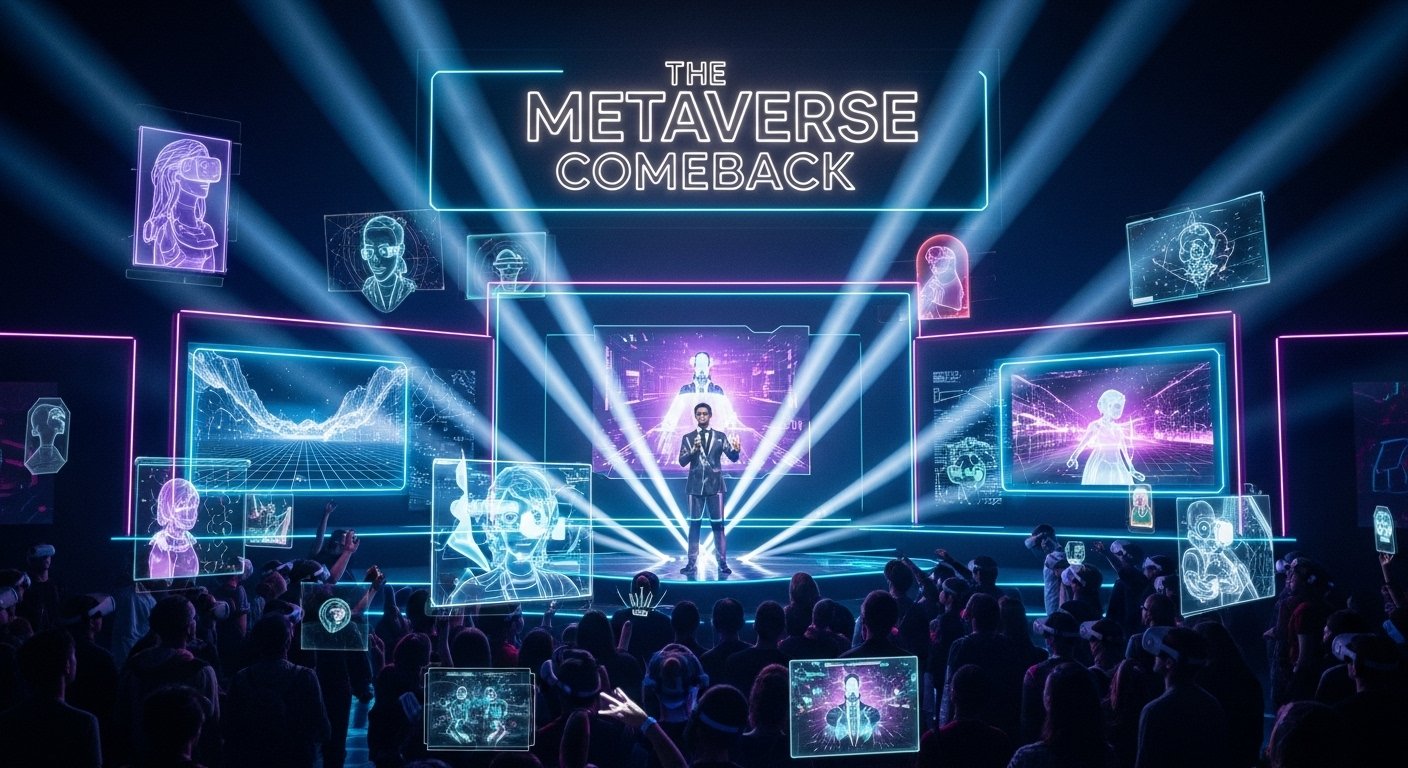
The Metaverse Comeback Through Agentic Commerce For a while, it seemed like the metaverse had quietly slipped out of the spotlight. After an explosive surge of hype, countless headlines, and massive corporate investments, enthusiasm cooled as practical use cases lagged behind expectations. Yet beneath the surface, the metaverse never truly disappeared. Instead, it has been evolving, adapting, and aligning itself with a new technological wave known as agentic commerce. Today, the metaverse is making a comeback, not as a speculative buzzword, but as a functional digital environment where intelligent agents, immersive experiences, and autonomous transactions converge.
Agentic commerce represents a shift in how value is created and exchanged online. Rather than relying solely on human-driven interactions, this model empowers AI agents to act autonomously on behalf of users, businesses, and platforms. When combined with immersive virtual environments, the result is a more dynamic, efficient, and personalized digital economy. This is where the metaverse re-enters the conversation with renewed relevance.
As digital identities mature, virtual spaces grow more sophisticated, and artificial intelligence, autonomous agents, and immersive virtual worlds intersect, the metaverse is positioned to play a central role in the future of commerce. Understanding this comeback requires exploring how agentic commerce works, why earlier metaverse visions struggled, and how new technological foundations are reshaping the landscape.
The Metaverse Comeback
The original concept of the metaverse revolved around persistent virtual worlds where users could socialize, work, shop, and create. It promised a seamless blend of physical and digital realities, supported by virtual reality, augmented reality, and blockchain-based ownership.
However, early implementations faced challenges. User experiences were often clunky, hardware adoption was slow, and economic models lacked sustainability. Many platforms emphasized speculative digital assets over meaningful interaction, leading to declining engagement once novelty faded.
Despite these setbacks, the core idea of shared digital spaces never lost its appeal. The infrastructure simply needed to mature, and that maturation is now being driven by agentic systems and smarter automation.
What Is Agentic Commerce and Why It Matters
Agentic commerce refers to an economic model where intelligent agents perform tasks, negotiate transactions, and optimize outcomes with minimal human intervention. These agents can represent individuals, brands, or entire ecosystems.
In practical terms, agentic commerce enables AI-driven decision-making across purchasing, logistics, pricing, and customer engagement. When embedded within immersive environments, these agents can operate in real time, responding to changing conditions and user preferences.
This shift matters because it addresses one of the metaverse’s early weaknesses: friction. By reducing complexity and automating routine actions, agentic commerce makes virtual economies more efficient and appealing.
The Metaverse as a Natural Home for Agentic Systems
Virtual worlds provide a spatial and social context that traditional websites cannot match. In the metaverse, agents are not abstract algorithms but embodied participants that can interact visually and contextually.
Imagine autonomous shopping assistants guiding users through virtual marketplaces or AI-powered brand representatives hosting immersive product launches. These scenarios demonstrate how agentic commerce thrives in environments where interaction feels natural and engaging.
As the metaverse is making a comeback in agentic commerce, it is precisely this embodiment of intelligence that gives virtual spaces renewed purpose.
How AI Agents Are Powering Metaverse Economies
AI agents serve as the backbone of agentic commerce. They analyze data, learn user preferences, and execute transactions with speed and accuracy.
Within the metaverse, these agents can manage virtual storefronts, optimize inventory, and personalize experiences at scale. Unlike static digital assets, intelligent agents adapt over time, making virtual economies more resilient. The integration of machine learning, predictive analytics, and autonomous decision-making transforms the metaverse from a passive environment into an active marketplace.
Digital Identity and Trust in Agentic Metaverse Commerce
Trust has always been a critical factor in commerce. In virtual environments, trust is established through digital identity, reputation systems, and transparent transactions.
Agentic commerce enhances trust by reducing human error and bias. Verified AI agents operate under defined parameters, ensuring consistency and accountability. As digital identity frameworks mature, users gain greater confidence in interacting with autonomous agents, further supporting the metaverse’s revival as a credible commercial space.
The Role of Virtual Goods and Services
Virtual goods were among the earliest drivers of metaverse economies. From digital fashion to virtual real estate, these assets demonstrated that value could exist entirely online.
Agentic commerce elevates this concept by enabling dynamic pricing, automated customization, and continuous optimization of virtual offerings. AI agents can monitor demand and adjust supply in real time. This evolution makes virtual goods more accessible and functional, reinforcing the metaverse as a legitimate marketplace rather than a novelty.
Enterprise Adoption and the Shift Toward Utility
One reason the metaverse lost momentum was the gap between enterprise investment and user adoption. Companies struggled to translate virtual presence into tangible value.
Agentic commerce bridges this gap by aligning enterprise goals with user needs. Automated agents streamline operations, reduce costs, and enhance engagement, making metaverse investments more practical. As enterprises focus on utility rather than spectacle, the metaverse is making a comeback as a tool for productivity and commerce.
Social Interaction Meets Autonomous Transactions
Social interaction has always been central to the metaverse experience. Agentic commerce adds a transactional layer that integrates seamlessly with social dynamics.
Users can negotiate deals through AI intermediaries, participate in virtual events where agents handle logistics, or collaborate with autonomous partners on creative projects. This blend of social presence and automated commerce creates richer experiences and sustainable economic activity.
Overcoming Past Limitations Through Technology
Earlier metaverse platforms were constrained by limited processing power, bandwidth, and interoperability. Today’s technological landscape looks very different.
Advancements in cloud computing, edge processing, and AI scalability enable more complex and responsive virtual environments. Agentic systems thrive in this context, handling tasks that once required significant manual oversight. These improvements explain why the metaverse is making a comeback now rather than earlier.
Interoperability and Cross-Platform Agentic Commerce
For the metaverse to succeed, it must move beyond isolated platforms. Interoperability allows assets, identities, and agents to function across environments.
Agentic commerce benefits from this openness. AI agents can operate across multiple virtual worlds, optimizing outcomes for users regardless of platform. This interconnected approach supports a more cohesive digital economy and strengthens the metaverse’s long-term viability.
Consumer Behavior in Immersive Agentic Markets
Consumer expectations have evolved. Personalization, convenience, and immediacy are now standard requirements.
Agentic commerce meets these demands by tailoring experiences in real time. Within the metaverse, this personalization feels more immersive and engaging than traditional interfaces. As users experience the benefits firsthand, adoption accelerates, fueling the metaverse’s resurgence.
Ethical and Economic Considerations
The rise of autonomous agents raises important questions about ethics, employment, and control. In the metaverse, these concerns are amplified by immersion and scale.
Responsible design and governance are essential to ensure that agentic commerce benefits all participants. Transparent algorithms and user oversight help maintain balance. Addressing these issues proactively strengthens trust and supports sustainable growth.
The Metaverse as an Experimental Economic Sandbox
Virtual worlds offer a unique environment for testing new economic models. Agentic commerce thrives in this experimental space.
Developers can simulate markets, refine agent behavior, and explore innovative value exchanges without real-world risk. This sandbox approach accelerates innovation and positions the metaverse as a laboratory for future commerce.
Long-Term Implications for Global Trade
As virtual economies mature, their influence extends beyond entertainment. Agentic commerce in the metaverse can impact global trade by reducing barriers and enabling new forms of collaboration.
Small businesses gain access to global audiences through autonomous agents that handle marketing and logistics. Consumers benefit from broader choices and competitive pricing. These dynamics illustrate how the metaverse’s comeback has implications far beyond virtual worlds.
The Cultural Shift Toward Digital-First Economies
Society is increasingly comfortable with digital-first experiences. Remote work, online education, and virtual events have normalized digital interaction.
Agentic commerce builds on this cultural shift by making digital environments more functional and efficient. The metaverse becomes a natural extension of daily life rather than a separate novelty. This alignment with cultural trends reinforces its renewed relevance.
Conclusion
The metaverse is making a comeback in agentic commerce because the technology and mindset have finally aligned. What once struggled under the weight of hype now benefits from intelligent automation, mature infrastructure, and a focus on real utility.
Agentic commerce transforms virtual worlds into living economies where autonomous agents enhance efficiency, personalization, and trust. By addressing earlier limitations and embracing innovation, the metaverse reclaims its position as a meaningful platform for digital interaction and trade.
As immersive environments and intelligent systems continue to evolve, the metaverse’s role in shaping the future of commerce appears not only possible but increasingly inevitable.
FAQs
Q: What does it mean that the metaverse is making a comeback in agentic commerce?
It means that virtual worlds are regaining relevance by integrating AI-driven autonomous agents that handle transactions, personalization, and economic activity, making the metaverse more practical and sustainable.
Q: How is agentic commerce different from traditional e-commerce in the metaverse?
Agentic commerce relies on intelligent agents that act autonomously, whereas traditional e-commerce depends on direct human input. In the metaverse, this creates smoother, more immersive, and efficient transactions.
Q: Why did the metaverse struggle before adopting agentic commerce?
Earlier metaverse platforms faced technological limitations, low user engagement, and unclear economic value. Without automation and intelligent systems, experiences often felt shallow or speculative.
Q: Can agentic commerce increase trust in metaverse transactions?
Yes, autonomous agents operating under transparent rules can reduce errors, bias, and friction, helping build trust through consistency, verified identities, and predictable outcomes.
Q: What is the long-term potential of the metaverse combined with agentic commerce?
The long-term potential includes global digital marketplaces, new business models, and immersive economic systems where virtual and real-world commerce increasingly overlap, reshaping how value is created and exchanged.
