

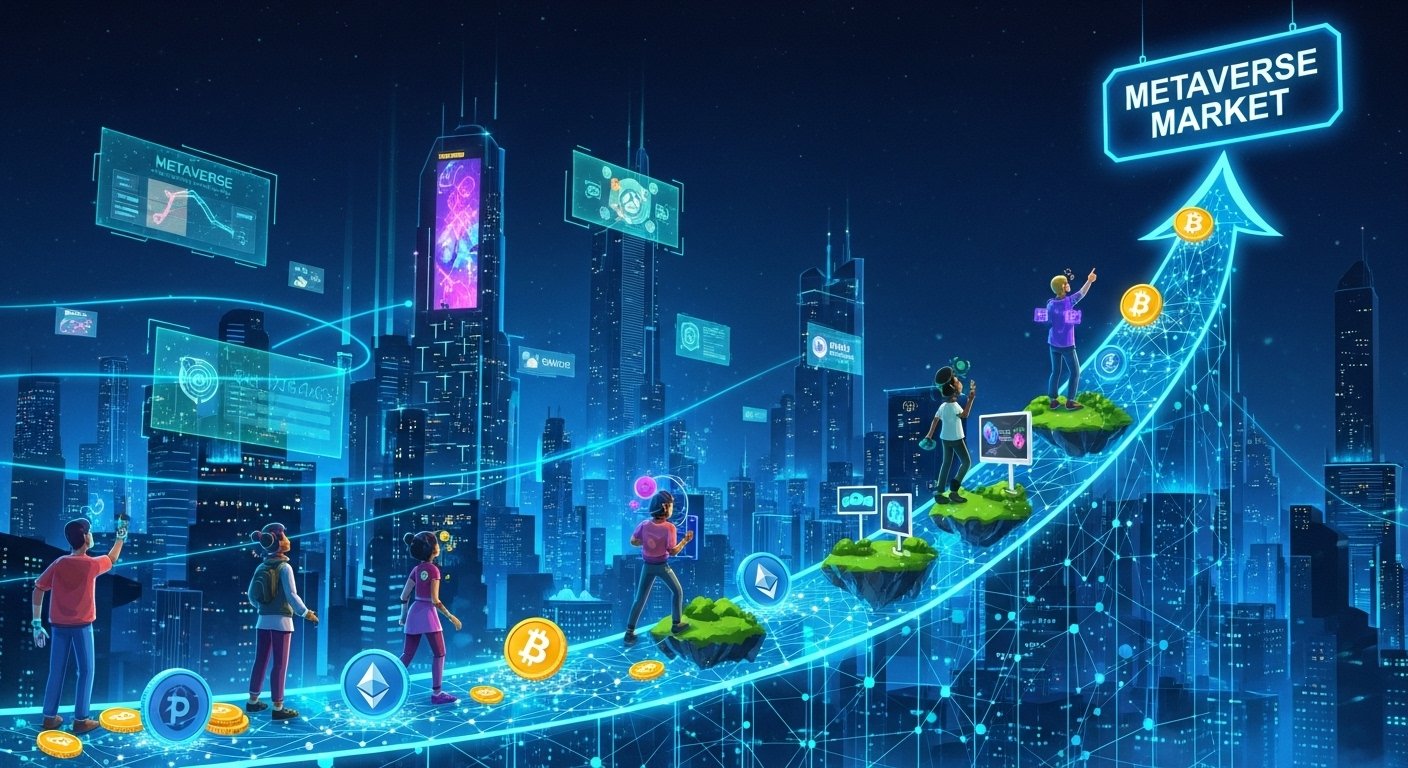
Metaverse Market Poised for Explosive Growth to USD 1,020.6 Billion by 2030 the global metaverse market is rapidly evolving from a futuristic concept into a powerful digital economy that is reshaping how people interact, work, shop, and entertain themselves. As immersive technologies mature and digital adoption accelerates, the metaverse market is projected to surge to an astonishing USD 1,020.6 billion by 2030. This explosive growth is being led by North America, which currently commands a dominant 44.6% market share, driven by strong technological infrastructure, high consumer adoption, and aggressive investments from leading technology companies. The convergence of virtual reality, augmented reality, blockchain technology, and digital economies is fueling a transformation that extends far beyond gaming into sectors such as healthcare, education, real estate, and enterprise collaboration.
The metaverse market is no longer a speculative trend. It represents a structural shift in how digital experiences are created and monetized. Companies are investing heavily in immersive platforms, creators are building new virtual worlds, and consumers are spending increasing amounts of time and money in digital environments. As hardware becomes more accessible and software platforms grow more sophisticated, the metaverse market is set to become a core pillar of the global digital economy over the next decade.
Metaverse Market Poised for Explosive Growth
The metaverse market refers to a collective virtual shared space created by the convergence of physical and digital realities. It is powered by immersive technologies, persistent virtual environments, and real-time social interaction. Unlike traditional digital platforms, the metaverse market emphasizes continuity, user-generated content, and economic systems that mirror or enhance real-world activities.
Evolution from Virtual Worlds to a Full Digital Economy
Early virtual worlds laid the foundation for what the metaverse market is becoming today. Initially centered around gaming and social interaction, these platforms have evolved into complex ecosystems that support commerce, education, and professional collaboration. The modern metaverse market integrates 3D virtual environments, digital avatars, and decentralized ownership models that allow users to create, own, and trade digital assets. This evolution has unlocked new revenue streams and attracted institutional interest, pushing market valuations higher.
Key Components Driving Metaverse Market Growth
Several core components are accelerating the expansion of the metaverse market. Advanced VR and AR devices are improving immersion and accessibility, while cloud computing ensures scalability and low-latency experiences. Blockchain-based systems enable secure digital ownership and transactions, supporting virtual goods and services. Together, these elements are transforming the metaverse market into a sustainable and rapidly growing economic ecosystem.
Market Size Projection: Why USD 1,020.6 Billion by 2030 Is Achievable
The projection of the metaverse market reaching USD 1,020.6 billion by 2030 reflects strong growth fundamentals rather than speculative hype. Multiple demand-side and supply-side factors are aligning to support this forecast.
Accelerating Adoption Across Industries
The metaverse market is experiencing rapid adoption across diverse industries. Enterprises are using immersive environments for training and remote collaboration, reducing costs while improving engagement. Retail brands are creating virtual storefronts that enhance customer experiences and drive digital sales. Healthcare providers are exploring virtual simulations for medical training and therapy. These real-world applications are expanding the addressable market and reinforcing long-term growth.
Investment Momentum and Corporate Participation
Major technology companies are committing significant capital to the metaverse market. Investments in spatial computing, AI-driven avatars, and virtual platforms are accelerating innovation. Venture capital inflows are also supporting startups focused on niche metaverse applications, from digital fashion to virtual real estate. This sustained investment momentum is a critical factor behind the ambitious market size forecast.
North America’s 44.6% Market Share: The Growth Engine of the Metaverse
North America’s leadership in the metaverse market is a result of its strong technological ecosystem and early adoption of immersive digital experiences. With a 44.6% market share, the region is shaping the global trajectory of metaverse development.
Technological Leadership and Innovation Hubs
North America is home to many of the world’s leading technology firms and innovation hubs. These companies are driving advancements in extended reality, AI, and blockchain integration, which are essential to the metaverse market.
The presence of skilled talent, research institutions, and supportive infrastructure creates an environment where metaverse platforms can rapidly scale.
Consumer Readiness and Digital Culture
High levels of digital literacy and consumer readiness are also contributing to North America’s dominance. Users in the region are more willing to adopt new technologies and spend on digital experiences. This cultural openness to innovation accelerates monetization opportunities within the metaverse market and attracts global developers and brands.
Role of Virtual Reality and Augmented Reality in Market Expansion
Virtual reality and augmented reality are at the heart of the metaverse market, enabling immersive experiences that differentiate it from traditional digital platforms. Continuous improvements in hardware and software are making these technologies more practical and appealing to mainstream users.
Hardware Advancements Enhancing Accessibility
Modern VR headsets and AR devices are becoming lighter, more affordable, and more powerful. These advancements lower entry barriers and expand the potential user base of the metaverse market. Improved display quality and motion tracking enhance realism, increasing user engagement and time spent in virtual environments.
Software Innovation and Content Creation
On the software side, development tools are becoming more user-friendly, enabling creators to build complex virtual worlds without extensive technical expertise. This democratization of content creation fuels innovation and diversity within the metaverse market, attracting users with varied interests and use cases.
Blockchain Technology and Digital Ownership in the Metaverse Market
Blockchain technology plays a crucial role in enabling digital ownership and economic activity within the metaverse market. It provides the infrastructure for secure transactions, decentralized governance, and transparent asset management.
Empowering Virtual Economies
Blockchain-based systems allow users to own and trade digital assets such as virtual land, collectibles, and in-game items. This ownership model creates real economic value and incentivizes participation in the metaverse market. Virtual economies built on blockchain principles are attracting both consumers and investors seeking new opportunities.
Trust, Security, and Interoperability
Trust and security are essential for the long-term success of the metaverse market. Blockchain enhances data integrity and reduces reliance on centralized authorities. Interoperability between platforms, supported by decentralized standards, further strengthens the ecosystem by allowing assets and identities to move across virtual worlds.
Enterprise Adoption and Commercial Use Cases
Beyond consumer entertainment, enterprise adoption is a major growth driver for the metaverse market. Businesses are recognizing the value of immersive environments for productivity, training, and customer engagement.
Virtual Workspaces and Collaboration
Remote and hybrid work models are accelerating demand for virtual workspaces. The metaverse market offers immersive collaboration tools that replicate physical presence and improve communication. Companies using these platforms report higher engagement and more effective teamwork, supporting widespread adoption.
Training, Simulation, and Education
Industries such as manufacturing, healthcare, and aviation are leveraging the metaverse market for training and simulation. Virtual environments allow employees to practice complex tasks in a risk-free setting, improving outcomes and reducing costs. Educational institutions are also exploring immersive learning experiences that enhance student engagement.
Consumer Applications and Social Interaction
Social interaction remains a core pillar of the metaverse market. Virtual communities, events, and entertainment experiences are attracting millions of users worldwide.
Entertainment, Gaming, and Virtual Events
Gaming continues to be a major entry point into the metaverse market, but the scope is expanding. Virtual concerts, exhibitions, and social gatherings are becoming mainstream, offering unique experiences that blend entertainment and community building.
Digital Identity and Self-Expression
Avatars and digital identities allow users to express themselves in creative ways.
This focus on personalization enhances emotional connection to virtual spaces and increases user retention, strengthening the overall metaverse market ecosystem.
Challenges and Risks Facing the Metaverse Market
Despite its strong growth outlook, the metaverse market faces several challenges that must be addressed to sustain momentum.
Technical and Infrastructure Limitations
High-quality immersive experiences require significant computing power and reliable connectivity. Infrastructure gaps in some regions could limit adoption and slow global expansion of the metaverse market.
Regulatory and Ethical Considerations
As virtual environments become more integrated into daily life, regulatory frameworks must evolve. Issues related to data privacy, digital rights, and online safety are critical considerations for the long-term credibility of the metaverse market.
Future Outlook: What Lies Ahead for the Metaverse Market
The future of the metaverse market is shaped by continuous innovation and expanding use cases. As technologies converge and user expectations evolve, the metaverse is likely to become an integral part of the digital economy.
Integration with Artificial Intelligence
AI-driven personalization, intelligent avatars, and adaptive environments will enhance user experiences and operational efficiency. This integration is expected to further accelerate growth in the metaverse market.
Global Expansion Beyond North America
While North America currently leads the metaverse market, other regions are rapidly catching up. Increased investment and adoption in Asia-Pacific and Europe will contribute to a more balanced global market over time.
Conclusion
The metaverse market is on a clear trajectory toward explosive growth, with projections indicating a valuation of USD 1,020.6 billion by 2030. Driven by North America’s commanding 44.6% market share, rapid technological innovation, and expanding real-world applications, the metaverse is transforming how individuals and organizations engage in digital environments. From enterprise collaboration and education to entertainment and virtual economies, the metaverse market represents a profound shift in the digital landscape. While challenges remain, the momentum behind immersive technologies, blockchain integration, and consumer adoption suggests that the metaverse will play a central role in the future global economy.
FAQs
Q: What factors are driving the metaverse market toward USD 1,020.6 billion by 2030?
The metaverse market is being driven by rapid adoption of immersive technologies, strong investment from major technology companies, and expanding use cases across industries such as gaming, healthcare, education, and enterprise collaboration. Improved hardware accessibility and blockchain-enabled digital ownership are also accelerating market growth.
Q: Why does North America hold a 44.6% share of the metaverse market?
North America leads the metaverse market due to its advanced technological infrastructure, high consumer readiness, and concentration of leading technology firms. Strong investment ecosystems and early adoption of VR, AR, and blockchain technologies further reinforce the region’s dominance.
Q: How does blockchain technology support the metaverse market?
Blockchain technology enables secure digital ownership, transparent transactions, and decentralized governance within the metaverse market. It supports virtual economies by allowing users to create, own, and trade digital assets, which adds real economic value to virtual environments.
Q: What role do enterprises play in the growth of the metaverse market?
Enterprises are major contributors to the metaverse market through the adoption of virtual workspaces, training simulations, and immersive customer engagement tools. These applications improve productivity, reduce costs, and expand the commercial relevance of the metaverse beyond entertainment.
Q: What challenges could impact the future growth of the metaverse market?
Challenges facing the metaverse market include technical limitations, infrastructure requirements, and regulatory concerns related to data privacy and digital rights. Addressing these issues will be essential to ensure sustainable growth and widespread adoption in the coming years.
