

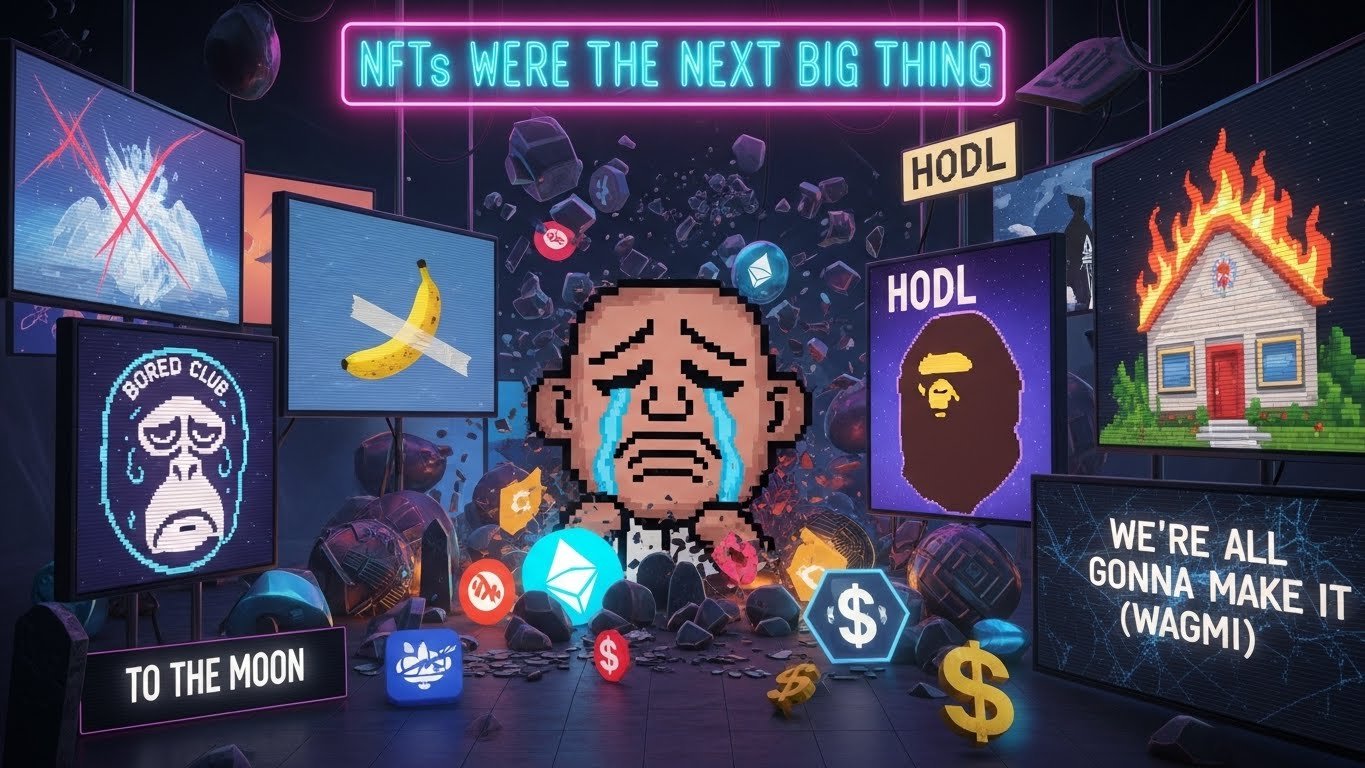
NFTs Were the Next Big Thing Until the Hype Faded Fast not long ago, NFTs were everywhere. Digital artworks sold for millions, celebrities rushed to launch collections, and social media timelines were flooded with pixelated avatars claiming to be the future of ownership. NFTs were supposed to be the next thing, a revolutionary leap in how value, creativity, and digital identity worked on the internet. Yet, almost as quickly as they rose, they faded from mainstream conversation. Today, many people look back and wonder how something once so dominant disappeared quicker than a meme.
The story of NFTs is not just about digital tokens or blockchain technology. It is a story about hype cycles, speculative behavior, cultural trends, and the clash between technological potential and real-world adoption. Understanding why NFTs collapsed so fast requires looking beyond price charts and headlines. It involves examining how expectations were built, why they failed to materialize, and whether NFTs are truly gone or simply evolving into something quieter and more practical.
NFTs Were the Next Big Thing
At their core, NFTs, or non-fungible tokens, were designed to represent unique digital ownership on a blockchain. Unlike cryptocurrencies that are interchangeable, NFTs were meant to certify originality and scarcity in digital assets. This concept appealed strongly to artists, creators, and collectors who had long struggled to prove ownership in a world where digital files can be endlessly copied.
The promise was powerful. NFTs were positioned as a way to empower creators, remove intermediaries, and create entirely new digital economies. Supporters believed NFTs could redefine art, music, gaming, real estate, and even identity. This vision fueled the idea that NFTs were supposed to be the next thing, not just a trend but a permanent shift in how the internet worked.
The Explosion of NFT Hype
The rapid rise of NFTs was driven largely by hype and speculation. High-profile sales created headlines that attracted mainstream attention. When digital artworks sold for life-changing sums, NFTs quickly became associated with overnight wealth.
Social media amplified this effect. Influencers promoted collections, celebrities endorsed projects, and fear of missing out spread rapidly. Many people entered the NFT space not because they understood the technology, but because they believed prices would keep rising. This speculative frenzy pushed NFTs into the cultural spotlight, but it also planted the seeds of their downfall.
Celebrity Endorsements and Mainstream Attention
Celebrity involvement gave NFTs an aura of legitimacy. Musicians, actors, and athletes launched collections, often with little explanation of their utility. While this brought attention, it also shifted focus away from long-term value toward short-term hype. For many buyers, NFTs became less about ownership and more about flipping for profit.
This phase reinforced the idea that NFTs were supposed to be the next thing everyone needed to get into, regardless of understanding or purpose.
Social Media and Meme Culture
NFTs thrived in meme culture, where trends rise and fall at lightning speed. Viral success stories created unrealistic expectations, and memes turned complex technology into simplified symbols of wealth. Ironically, the same meme-driven momentum that propelled NFTs forward also made their collapse faster and more dramatic.
Why NFTs Fell So Fast
Despite the initial excitement, NFTs were gone quicker than a meme because fundamental issues emerged once the hype cooled. The gap between promise and reality became increasingly difficult to ignore.
Lack of Real Utility
One of the biggest problems was the lack of practical use cases. While NFTs were marketed as revolutionary, many projects offered little beyond speculative value. Owning a digital image did not always provide meaningful rights, access, or functionality.
As buyers realized that many NFTs had no utility beyond resale, demand began to drop. Without strong use cases, the market could not sustain its inflated valuations.
Oversaturation of the Market
The NFT space became oversaturated quickly. Thousands of new collections launched with similar concepts, aesthetics, and promises. This abundance diluted scarcity, which was supposed to be a core value of NFTs.
When everyone could mint an NFT, uniqueness lost meaning. Buyers struggled to distinguish between meaningful projects and low-effort cash grabs, leading to declining confidence.
Environmental and Ethical Concerns
Environmental criticism also played a role in the decline. NFTs, especially those built on energy-intensive blockchains, faced backlash for their carbon footprint. Artists and consumers began questioning whether the environmental cost justified the perceived benefits.
Ethical concerns emerged as well, including plagiarism, scams, and misleading marketing. These issues damaged trust and contributed to the rapid loss of interest.
The Role of Speculation and Market Psychology
Speculation was both the fuel and the downfall of NFTs. Prices rose not because of intrinsic value, but because buyers expected others to pay more later. This speculative loop is unsustainable by nature.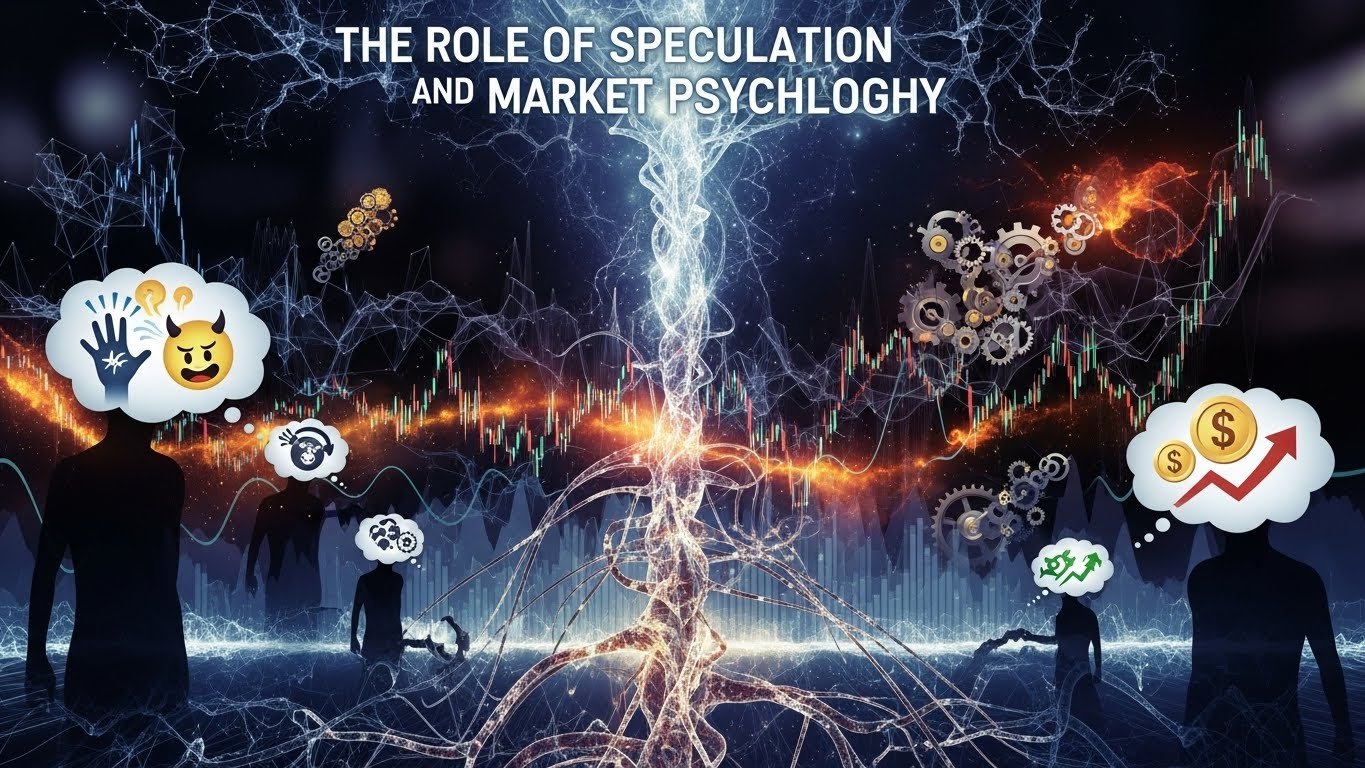
When market sentiment shifted, the same investors who rushed in also rushed out. Prices collapsed, trading volume dried up, and NFTs were suddenly labeled a failed experiment rather than the next big thing.
Fear of Missing Out Turned Into Fear of Loss
During the boom, fear of missing out drove irrational decisions. During the bust, fear of loss took over. Many holders watched values plummet and chose to exit at any price, accelerating the decline.
This emotional cycle is common in speculative markets, but NFTs experienced it at an unusually fast pace.
NFTs and the Broader Crypto Market
The rise and fall of NFTs cannot be separated from the broader crypto market. NFTs thrived during a period of easy money, low interest rates, and high risk appetite. When economic conditions changed, speculative assets suffered.
As cryptocurrencies declined, liquidity left the NFT market as well. Buyers had less capital and less confidence, which further reduced demand. The collapse of NFTs mirrored the broader shift away from speculative excess.
NFTs Really Gone or Just Quiet
While NFTs disappeared from headlines, it would be inaccurate to say they vanished entirely. Instead, NFTs moved out of mainstream hype and into a quieter phase of experimentation.
Many developers and creators continue to explore NFTs in gaming, digital identity, and intellectual property. The difference is that these projects focus more on functionality than on speculation.
NFTs in Gaming and Virtual Worlds
In gaming, NFTs are being tested as tools for item ownership and interoperability. Players can own in-game assets that persist beyond a single platform. This approach aligns more closely with the original promise of NFTs, even if it lacks flashy headlines.
NFTs as Digital Infrastructure
Some companies are using NFTs behind the scenes as infrastructure for ticketing, licensing, and verification. In these cases, users may not even realize they are interacting with NFTs. This quiet integration suggests that NFTs may survive in less visible but more practical forms.
Lessons Learned From the NFT Boom and Bust
The NFT story offers important lessons about technology adoption and hype cycles.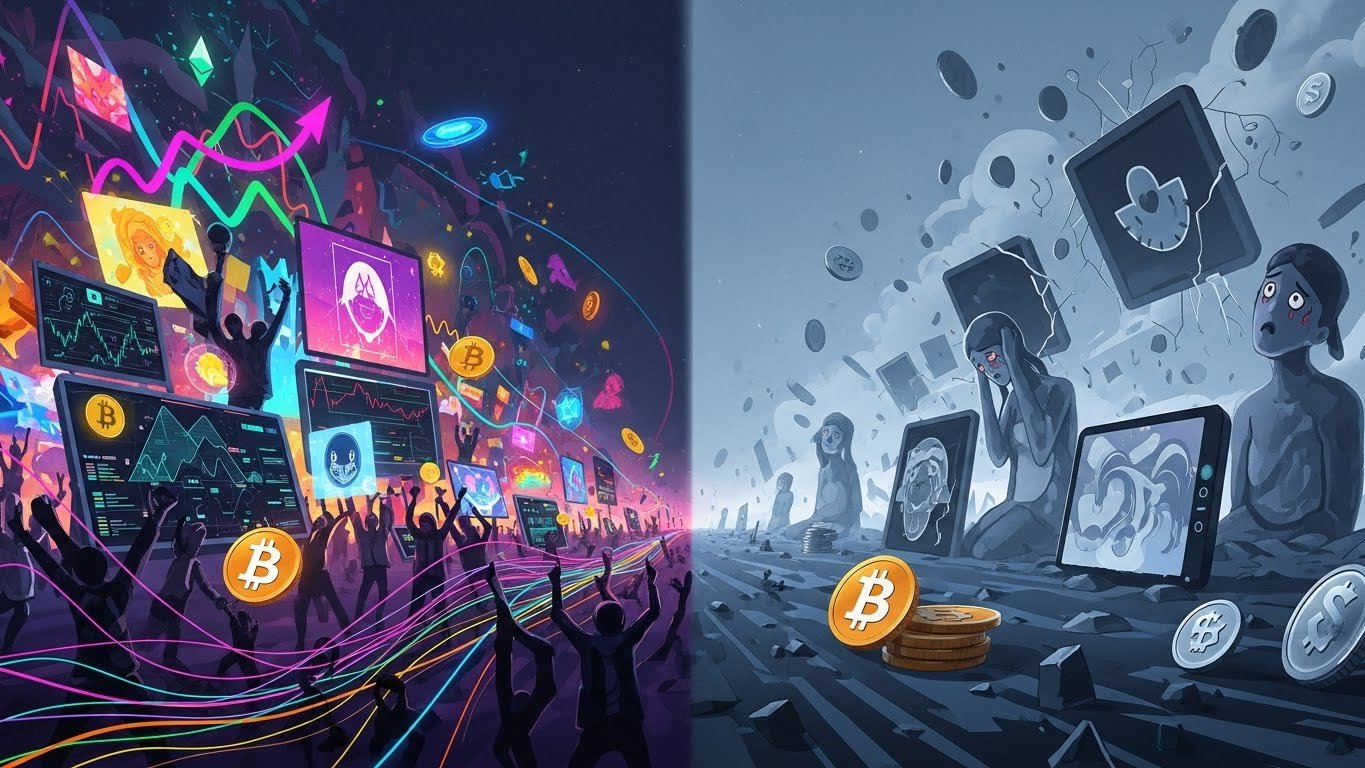
It highlights the danger of confusing potential with readiness and speculation with value.
Technology Needs Time to Mature
NFTs were introduced to the mainstream before the ecosystem was ready. User experience was poor, education was limited, and infrastructure was immature. These factors made it difficult for NFTs to deliver on their promises at scale.
Hype Cannot Replace Fundamentals
No matter how exciting a technology sounds, it needs real-world applications and sustainable economics. The NFT boom showed what happens when hype outpaces substance.
The Cultural Impact of NFTs
Beyond finance and technology, NFTs left a cultural mark. They changed conversations about digital ownership and challenged traditional ideas of art and value.
Artists experimented with new distribution models, and audiences reconsidered what it means to own something digital. Even if NFTs were gone quicker than a meme in popular culture, their influence continues to shape creative industries.
What Comes After NFTs
The decline of NFTs does not mean the end of innovation in digital ownership. Instead, it marks a transition toward more refined and purpose-driven solutions.
Future technologies may build on NFT concepts without using the same terminology. Ownership, provenance, and digital scarcity remain relevant problems, and blockchain-based tools may still play a role in solving them.
Conclusion
NFTs were supposed to be the next thing, a transformative force that would redefine digital ownership and creativity. Instead, they were gone quicker than a meme, collapsing under the weight of hype, speculation, and unmet expectations. Yet, their rapid rise and fall does not mean they were meaningless. NFTs exposed important questions about value, ownership, and the future of the internet.
While the mainstream NFT craze has faded, the underlying ideas continue to evolve quietly. The next phase of digital innovation will likely take lessons from the NFT era, focusing less on hype and more on genuine utility. In that sense, NFTs may not be the end of the story, but rather an early, chaotic chapter in a much longer narrative.
FAQs
Q: Why were NFTs supposed to be the next thing in digital ownership
Q: NFTs were expected to revolutionize digital ownership because they offered a way to prove uniqueness and authenticity on the blockchain. This appealed to creators and collectors who wanted scarcity and ownership in a digital-first world.
Q: What caused NFTs to disappear from mainstream attention so quickly
Q: NFTs lost mainstream attention due to oversaturation, lack of real utility, environmental concerns, and a collapse in speculative demand once market sentiment shifted.
Q: Are NFTs completely dead or still being used today
Q: NFTs are not completely dead, but they are no longer driven by hype. They are being used quietly in areas like gaming, ticketing, and digital verification without the speculative frenzy seen before.
Q: What lessons can investors learn from the NFT boom and bust
Q: Investors can learn that hype-driven markets are risky and that long-term value depends on real use cases, sustainable demand, and solid fundamentals rather than viral popularity.
Q: Could NFTs make a comeback in the future
Q: NFTs could return in a different form if they are integrated into practical applications that provide clear benefits. Any future resurgence would likely focus on utility and user experience rather than speculation.
